Loading preview…

Agency97
agency97.comPricing not published — contact for a project quote.
Digital servicesAnalytics
Visit siteChester
Compare local studios, agencies and freelancers side by side — pricing, specialisms, who they work with, and how to get in touch. No paid placements. No fluff.
Browse by specialism
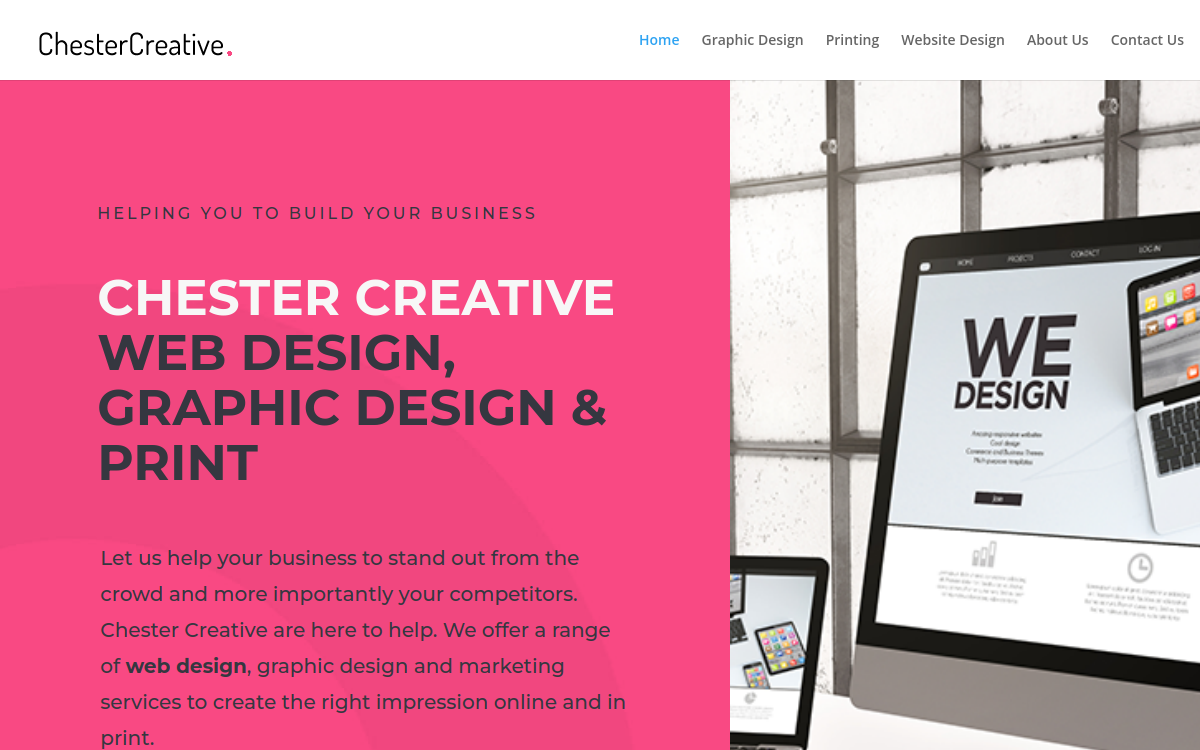
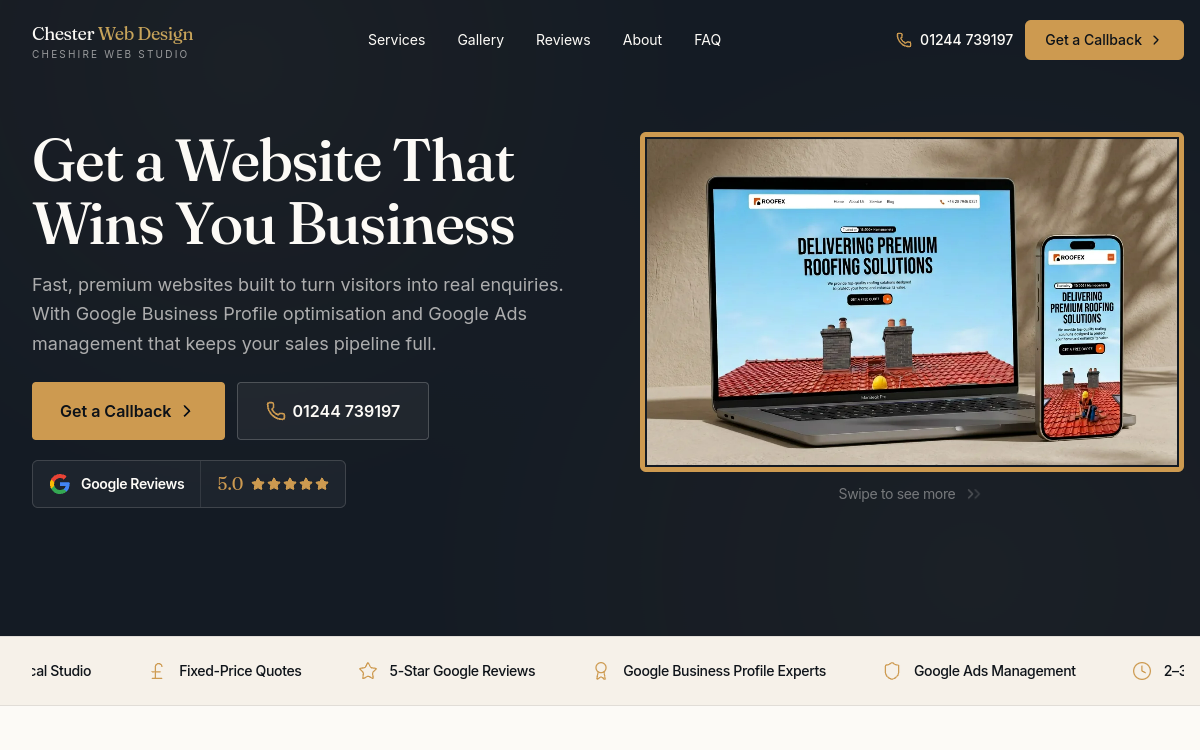
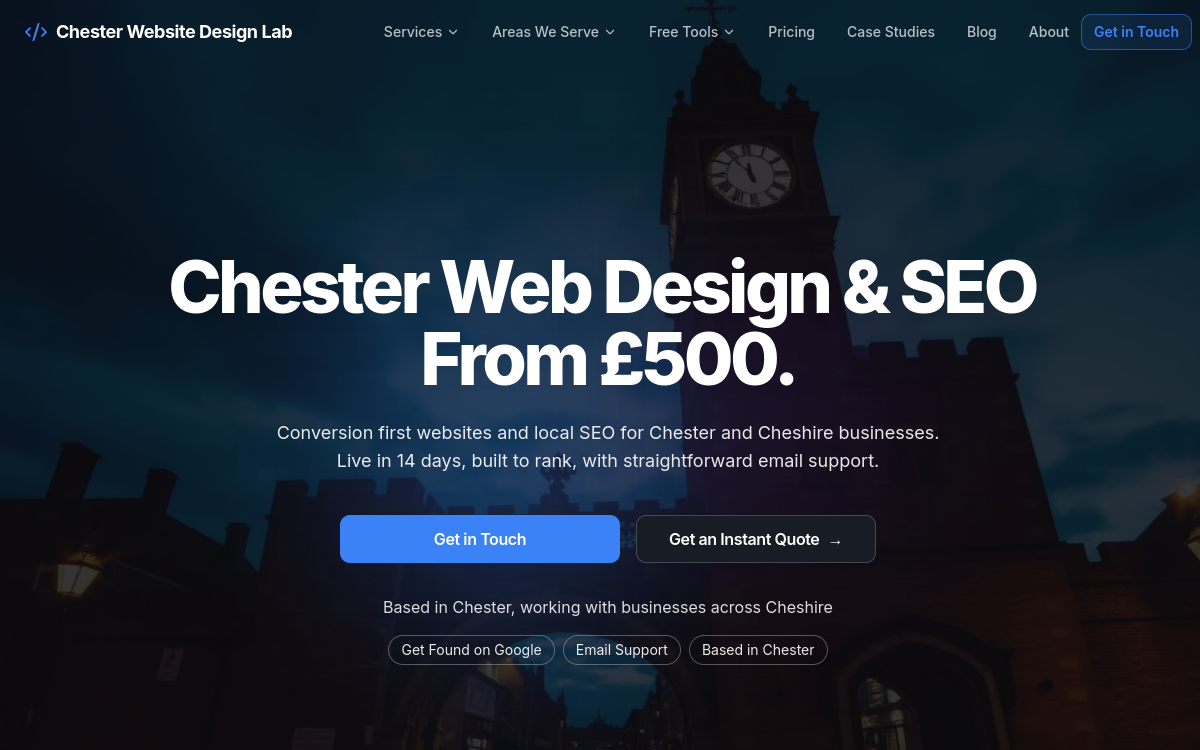
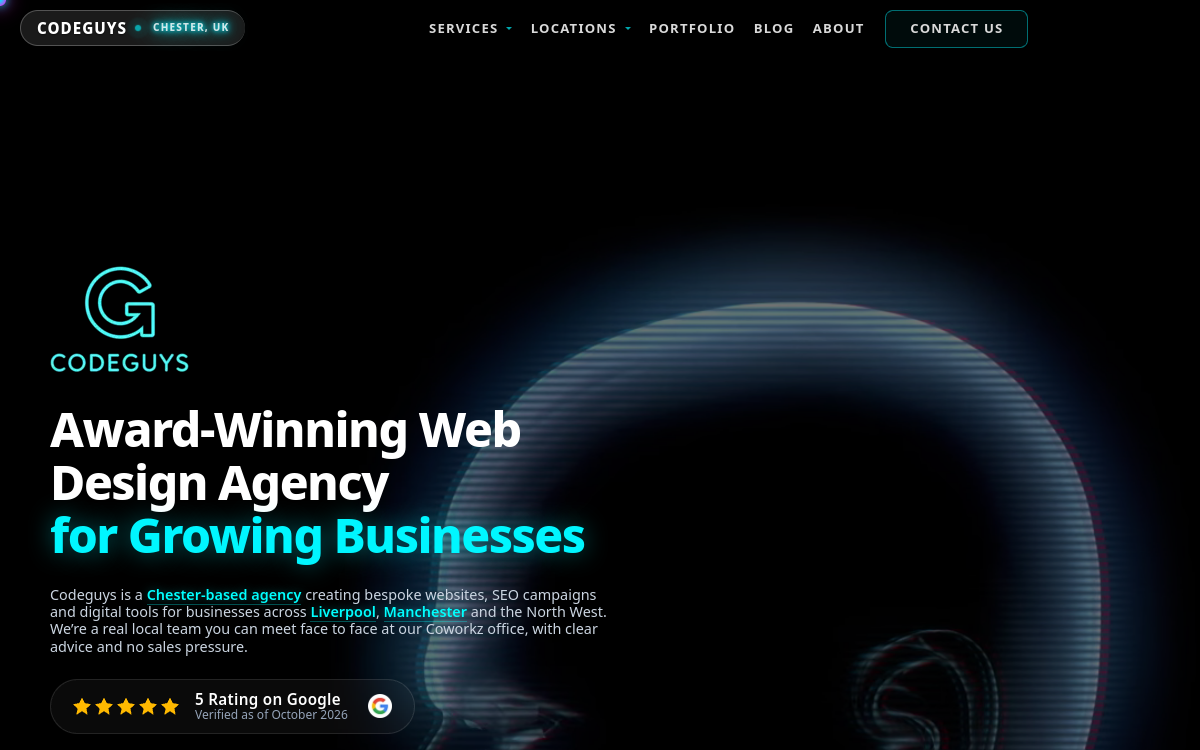
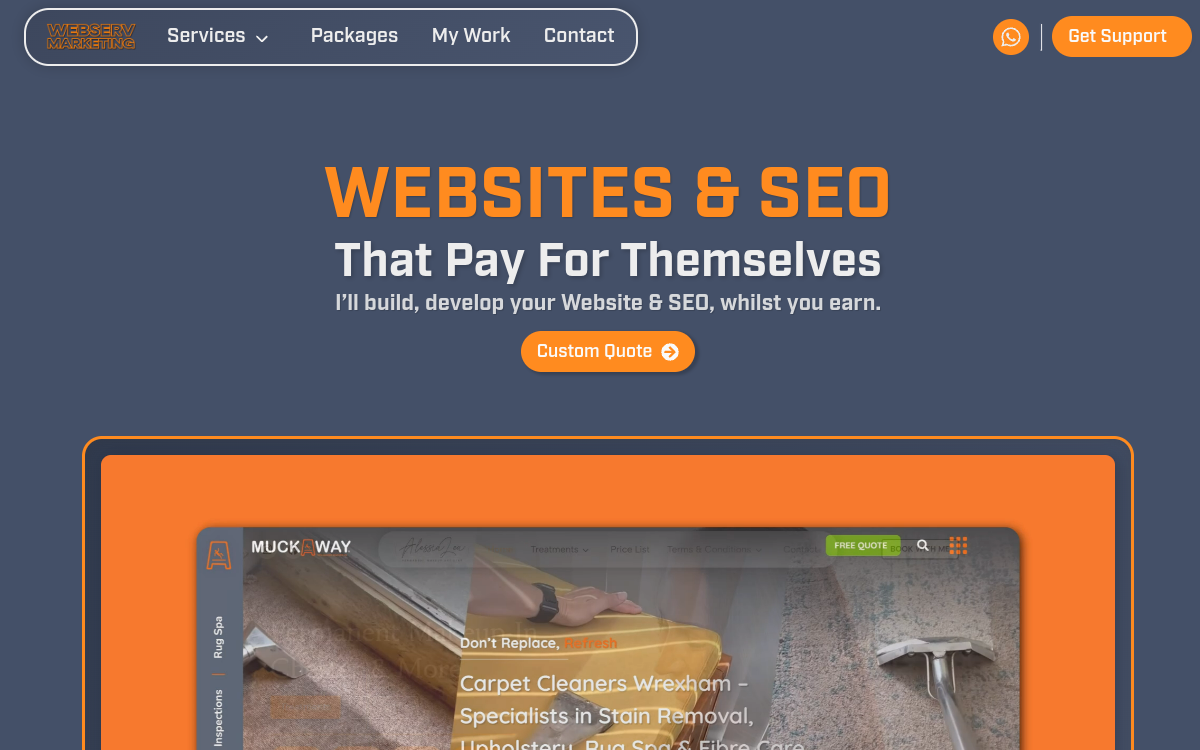
Listings shuffle on every visit. Screenshots load live from each studio's homepage.





Try a different specialism or select "All studios".
Everything you need to know about hiring a web designer in Chester — pricing, process, ownership and more.
What things actually cost
From the studios that publish figures, small brochure sites start around £500–£600, while ecommerce and custom builds typically run from a few thousand pounds upward.
Most Chester studios quote per project rather than hourly — because two "five-page websites" can involve wildly different amounts of work.
Because the scope varies so much. A studio that publishes "from £500" still needs to understand your goals, page count, integrations, content and timeline before quoting properly.
That said, a good studio will give you a ballpark early — often after a short call.
A one-off fee covers the design and build of the site. A retainer (typically £50–£2,000/month depending on scope) covers ongoing work: hosting, security updates, plugin maintenance, content edits, SEO and sometimes marketing.
Almost always. Expect domain renewal (~£10–£15/year), hosting (£5–£50/month depending on traffic and stack), any premium plugins or platform subscriptions, and potentially a maintenance plan.
Most studios ask for a deposit — typically 25–50% upfront, with the balance on completion or in milestone payments.
Be cautious of anyone asking for 100% upfront before any work begins.
Finding the right fit
Look at their portfolio and ask whether the sites actually do what you need — responsive, fast, accessible, easy to update. Then check fit: a studio that specialises in ecommerce may not be the best choice for a small brochure site.
Two or three is usually enough. More than that and you'll spend more time comparing than deciding. Make sure you're comparing like for like.
What you're actually buying
Design covers how the site looks and how users move through it. Development covers how it works — the code, integrations, database, hosting, performance.
SEO isn't a one-time add-on — it's an ongoing practice. A well-built site will have solid technical SEO foundations, but ranking for competitive terms requires content, links and time.
WordPress suits content-led sites and small ecommerce. Shopify is purpose-built for online stores. Custom builds make sense when you need something that doesn't fit an existing platform — but they're more expensive to build and maintain.
Many Chester studios offer branding, logo design, print and social media alongside web work. This can be convenient and produce a more cohesive result.
How a project actually runs
A small brochure site typically takes 4–8 weeks from kickoff to launch. Ecommerce and larger builds commonly take 8–16 weeks.
With WordPress, Shopify and most modern platforms, yes — and you should insist on it. Ask for a training session or documentation, and confirm you'll get admin access.
Does location still matter?
No — plenty of businesses work successfully with remote studios. But local has real advantages: face-to-face meetings, easier collaboration, understanding of the local market, and someone you can actually visit if something goes wrong.
Avoiding common pitfalls
You should. That means the domain, the hosting account, the design files and the code. Get this in writing.
Both matter. Accessibility (WCAG) ensures your site works for people using screen readers, keyboard navigation and other assistive tech. GDPR affects how you collect, store and process visitor data.